Best Boat Trailer Bow Stop Pads for Safe Hauling
When selecting bow stop pads for a boat trailer, choose parts that cushion and guide the bow, prevent hull damage, and fit your trailer’s mounting dimensions. This guide covers five solid options suited for different boat sizes, trailer types, and mounting needs. Ideal buyers include anglers needing quick replacements, boat owners seeking non-marking protection, and trailer users prioritizing durable, wear-resistant construction. Below is a quick comparison to help you decide which bow stop pad best fits your setup.
| Product | |||
|---|---|---|---|
| Pangda Flat Boat Trailer 3×3 | Lightweight loads and 1/2″ shafts | 3 x 3 inches; fits 1/2″ shafts | Thick rubber; marine-ready durability |
| Attwood Boat Trailer Rubber Bow 3×3 Y-Stop | Non-marring, bow-cradle support | 3″ length/width; 1/2″ mounting hole | Soft rubber protects finish |
| Kesoto 6 Inch Mounting Width Bow Stop | Non-marking protection with wide mounting | 6″ mounting width; mounting notches included | Non-marking; tough molded rubber |
| 2″ V-Style Bow Stop (TPU) | High wear resistance with buffering | 2″ width; 1/2″ hole | TPU; durable and elastic |
| niffgaff Protective Bow Stop Roller 3”×1/2” | Bow protection during loading and retrieval | 3″ length; 1/2″ mounting | Wear-resistant; easy to install |
Pangda Flat Boat Trailer 3×3 Review

The Pangda 3×3 flat-bottomed roller aims to keep boats moving smoothly on trailers, simplifying loading and unloading during fishing trips. Best for trailers that use 1/2-inch shafts, this pad is designed to replace or extend existing equipment with a 3 x 3 inch footprint. Its thick rubber construction resists marine exposure and helps reduce hull wear. Choose this if you need a straightforward, compact pad that fits common shaft sizes and prioritizes durability in saline or damp environments. A potential limitation is the fixed 3×3 size, which may not suit wider trailer setups.
Attwood Rope Bow 3×3 Y-Stop

The Attwood Y-stop bow pad focuses on finish protection with a non-marring rubber that cradles the bow for a secure hold. Its 3-inch footprint and 1/2-inch mounting hole suit trailers seeking a snug, bow-friendly design. This option is best for boat owners who want a gentle touch that minimizes hull scratches, especially on newer finishes. A caveat: the Y-stop shape may require precise alignment to ensure full surface contact with the bow during loading.
Kesoto Non-Marking 6-Inch Bow Stop
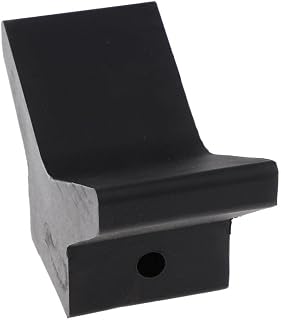
Kesoto’s bow stop emphasizes non-marking protection with a broader mounting width. It attaches to the trailer’s winch stand, making it suitable for setups needing a larger contact area to distribute impact forces. This pad is ideal if you regularly haul larger boats where a wider contact patch reduces hull wear. A limitation is the broader footprint, which may not fit all trailer configurations or mounting spaces without modification.
2″ V-Style TPU Bow Stop

This V-shaped bow stop uses TPU for excellent wear resistance and elasticity, designed to absorb impact and protect the bow from scratches. It features a 2-inch width with a 1/2-inch mounting hole, making it compatible with many trailers seeking a compact, durable buffer. Choose this if you want a modern polymer that cushions minor impacts and lasts longer under frequent loading. A potential drawback is compatibility limits on older trailer frames with different mounting patterns.
niffgaff Roller Bow Stop 3”×1/2”

The niffgaff protective bow stop roller emphasizes ease of installation and wear resistance. With a 3-inch length and 1/2-inch mounting, it cushions the bow during loading and protects against surface damage over time. Best for boaters who want a straightforward upgrade that reduces hull contact issues. Avoid this option if your trailer requires a more substantial or wider contact area to prevent hull scuffing on larger vessels.
Buying Guide
What should you consider before buying a bow stop pad?
Dimension compatibility is critical. Check your trailer’s mounting hole diameter, overall bow stop width, and the trailer winch stand layout. Non-marking materials help preserve hull finishes, especially on fresh paint or coated surfaces. Material choice (rubber vs. TPU) affects wear resistance, elasticity, and impact buffering. For larger boats, a wider bow-stop footprint can distribute loads better and reduce concentrated stress on the bow.
Which features matter most for different boat sizes?
- Small to medium boats: 3″ to 6″ footprints with 1/2″ mounting holes are typically sufficient.
- Large boats: Look for wider stops or V-shaped/ TPU designs that provide better energy absorption and secure cradling.
- Frequent launching and retrieval: Non-marking and cushioned surfaces reduce hull wear and scratches during repeated use.
What trade-offs should you expect?
- Smaller pads are easier to install on compact trailers but may offer less surface protection.
- Non-marking materials protect finishes but can be slightly stiffer, affecting cushioning on rough roads.
- Wider or V-shaped designs provide better protection for larger hulls but require more space and precise alignment.
How to install and maintain bow stop pads?
- Follow manufacturer mounting hole dimensions (commonly 1/2 inch). Use proper hardware to secure the pad.
- Inspect for wear after several trips; replace if the rubber shows cracks or the TPU becomes deformed.
- Keep the area clean of debris to maintain smooth coupling and unloading.
Compatibility and long-term costs
Consider how it pairs with your trailer’s winch stand and bow configuration. Non-marking compounds reduce hull finish repairs, potentially lowering long-term maintenance costs. A durable pad may have a higher upfront cost but saves on frequent replacements for high-use trailers.
FAQ
- Q: Will a 3×3 bow stop fit all trailers?
A: Not all. Check mounting hole size and bow stop width to ensure proper fit. - Q: Is TPU better than rubber for bow stops?
A: TPU offers excellent wear resistance and elasticity, but rubber can be more forgiving and affordable. - Q: Should I choose a wider bow stop for a larger boat?
A: Yes, a wider contact area distributes impact better and reduces hull wear on big boats. - Q: Can I reuse existing mounting hardware?
A: It depends on hole size and alignment. Always verify compatibility with your trailer’s hardware. - Q: How often should bow stops be replaced?
A: Inspect after every 20–30 uses; replace if there are visible cracks, deformations, or loss of cushioning. - Q: Do these pads affect loading ease?
A: Properly chosen pads reduce friction and guide the bow, making loading smoother and safer.