Best Fuel Additives for Outboard Motors: Protect Your Engine and Improve Performance
When selecting a fuel additive for an outboard motor, choose products that fight ethanol-related issues, prevent corrosion, and keep fuel stable during storage. The top picks here are designed for marine use and address common concerns like varnish buildup, phase separation, and fuel-system deposits. This guide helps anglers, boat owners, and fleet operators decide which additive best fits their engine type, fuel, and storage habits. The table below summarizes the five options and their core strengths for quick comparison.
Quick Product Comparison
| Product | Best For | Key Benefit | Notable Consideration |
|---|---|---|---|
| Yamaha Yamalube Outboard Ring Free Plus | Pre-1990s to modern engines with ethanol exposure | Decarbonizes and protects fuel system; fights corrosion | Marine-specific formula; compatible with Yamaha engines |
| Sea Foam Motor Treatment (16 oz, pack of 3) | Gas and diesel engines needing deep cleaning | Clears varnish, cleans injectors, stabilizes fuel | Recommended every 3,000 miles; multiple-unit pack |
| Yamaha Yamalube Outboard Fuel Stabilizer & Conditioner Plus | Alcohol-sensitive fuels and long storage | Prevents oxidation and phase separation; protects metals | Alcohol-free; long-term storage protection |
| Mercury 8M0047930 Quickare | Any gasoline with ethanol blends needing varnish control | Cleans varnish, keeps fuel fresh up to 3 months | Marine-focused but general-use compatibility |
| Quicksilver Quickare 8M0047920 | All gasoline grades with ethanol blends | Removes varnish and gum; prevents phase separation | All-in-one fuel treatment for multiple engine types |
Yamaha Yamalube Outboard Ring Free Plus Fuel Additive

Product highlights: Ring Free PLUS includes a fuel stabilizer and conditioner to fight fuel-system corrosion, phase separation, and fuel oxidation. The formula aims to keep Yamaha marine engines clean and efficient. Best for Yamaha engines or any outboard with ethanol exposure. A potential limitation is that efficacy is discussed in the context of marine use and years of Ring Free experience.
Sea Foam Motor Treatment (16 oz, Pack of 3)

Product highlights: Deep fuel system cleaning that aids smoother idling, power restoration, and better MPG by cleaning fuel injectors, carburetor restrictions, and chamber areas. Use every 3,000 miles for best results. Best for engines needing comprehensive cleaning across gas and diesel fuels. Caution: Pack size may influence per-use value depending on maintenance interval.
Yamaha Yamalube Outboard Fuel Stabilizer & Conditioner Plus

Product highlights: Alcohol-free formula designed to prevent fuel oxidation and phase separation when moisture is present. Helps keep fuel fresh and free from gum and varnish for up to a year in storage. The metal films provide protection for steel and aluminum components. Best for long-term storage and engines running on ethanol-containing fuels. Limitation: The description emphasizes metal protection; verify compatibility with specific outboard models.
Mercury 8M0047930 Quickare Fuel Treatment Additive
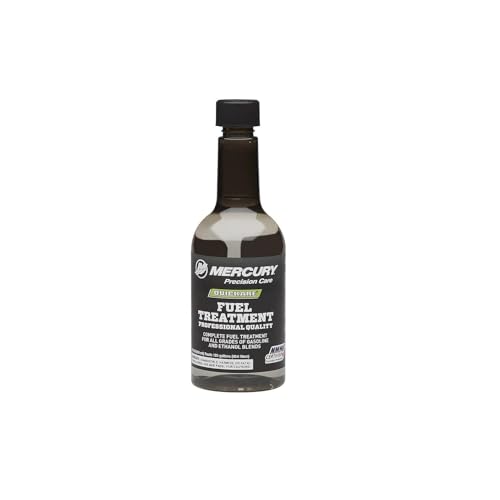
Product highlights: Keeps fuel fresh between fill-ups for up to three months and cleans existing varnish, gum deposits, and deposits in fuel lines and components. Helps control corrosion and phase separation associated with ethanol-blended gasoline. Best for boaters needing a trusted, time-limited storage solution. Caution: It addresses varnish and corrosion but may require regular application for optimal results in extreme climates.
Quicksilver Quickare 8M0047920 Fuel Treatment Additive
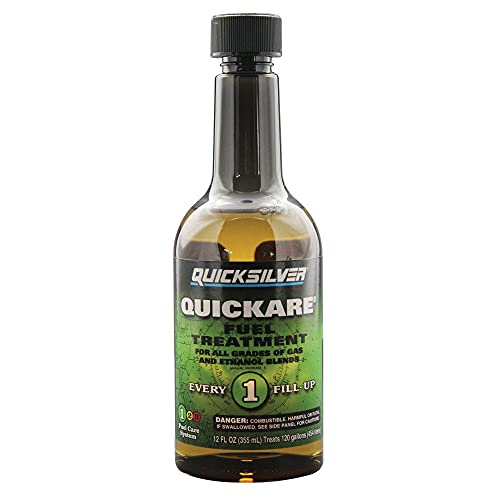
Product highlights: Maximizes engine performance with all grades of gasoline and ethanol blends by removing varnish and gum deposits. Also helps control corrosion, gum, varnish build-up, and phase separation. Best for fleets or boaters using mixed fuel supplies. Limitation: Like other fuel treatments, results depend on existing buildup and storage duration.
Buying Guide: How to Choose the Right Marine Fuel Additive
What should you consider before buying? Identify your primary concern—storage stability, cleaning power, or corrosion protection. Start with alcohol-free formulas if your fuel contains ethanol, and consider additives that specifically address phase separation in humid environments. For seasonal boats, storage protection and long-term stability matter more than immediate cleaning.
Key questions to ask
- Is the additive designed for outboard engines and marine fuel systems?
- Does it combat ethanol-related issues, such as phase separation and corrosion?
- Will it clean varnish, gum, and deposits from fuel lines and injectors?
- What storage duration does the product support without gum formation?
- How often should the product be used for your boat’s fuel type and mileage?
How to use fuel additives effectively
- Follow the manufacturer’s dosing instructions based on fuel type and tank size.
- Use before extended storage to prevent varnish and corrosion.
- Avoid mixing multiple additives unless the label explicitly allows it.
Maintenance considerations for outboards
- Regular fuel stabilizers help during idle periods and off-season storage.
- Fuel cleaners are best for engines with periodic rough idle or reduced performance.
- For high-ethanol marine fuels, select alcohol-free stabilizers to minimize moisture-related oxidation.
Compatibility and model considerations
Check if the additive lists compatibility with your outboard’s make, model, and year. Some products are optimized for Yamaha or Mercury engines, while others are universal. When in doubt, consult your engine manual or a marine technician to ensure proper use with your specific setup.
FAQ
- Q: How often should I add fuel stabilizer to my outboard fuel tank?
A: Use as directed for storage and seasonal changes; many products suggest quarterly or pre-storage treatment plus periodic use during boating seasons. - Q: Can I mix multiple fuel additives?
A: Do not mix unless the label explicitly allows it; mixing can cause unexpected chemical interactions. - Q: Is an alcohol-free stabilizer necessary for ethanol-containing fuels?
A: Alcohol-free formulas reduce moisture-related oxidation and phase separation risks in ethanol blends. - Q: Will fuel cleaners damage my engine?
A: When used as directed, cleaners help remove varnish and deposits without harming engine components; follow dosing instructions carefully. - Q: What is the best option for long-term storage?
A: Stabilizers that prevent oxidation and phase separation are ideal for long-term storage, especially in humid environments. - Q: Do these additives affect warranty coverage?
A: Most manufacturers do not void warranties when used as directed; verify with your dealer or manufacturer if you have warranty concerns.