Best Fiberglass Tape for Boats: Durable Marine Repair Tapes for Seams and Repairs
Answering the need for reliable boat repairs, this guide highlights the best fiberglass tapes and cloths for marine use. It helps buyers pick products suited for boat seams, hull patches, and reinforcing joints. The top picks favor ease of use, material quality, and compatibility with common resins. This overview is ideal for boat owners, DIY hobbyists, and professionals seeking durable, water-resistant options. A quick summary table follows to compare key products at a glance.
| Product | Best For | Notes |
|---|---|---|
| Acuteye Fiberglass Cloth Roll | General boat repairs, pipes, sinks, tanks | Non-adhesive cloth; versatile cutting |
| Better Boat White Waterproof Tape | Marine patches and leaks | Thick, rubberized vinyl; strong adhesion |
| TOAXUUL Fiberglass Cloth Tape | Reinforced repairs, larger gaps | 1″ width, 99 ft length |
| SICCOMA Fiberglass Cloth Roll | Seams, moldings, boat repairs | Non-adhesive; plain weave |
| CRMCC Fiberglass Mat Tape | Targeted reinforcement, seams | Chopped strand mat format |
Acuteye Fiberglass Cloth Roll, 4 Inches*99 Feet

Acuteye’s fiberglass cloth roll provides a broad, non-adhesive fabric suitable for reinforced repair work. The 4″ width and 99-foot length allow easy cutting and tailored coverage. The cloth is woven from high-quality fiberglass with lock edges to resist fraying, and it offers strong electrical insulation and flame retardancy. This option is best for buyers who want a flexible cloth that can harden with resin for boat seams, pipes, and other structural repairs. A potential limitation is that it does not include adhesive; bonding relies on resin or external sealants.
Better Boat White Waterproof Tape for Leaks
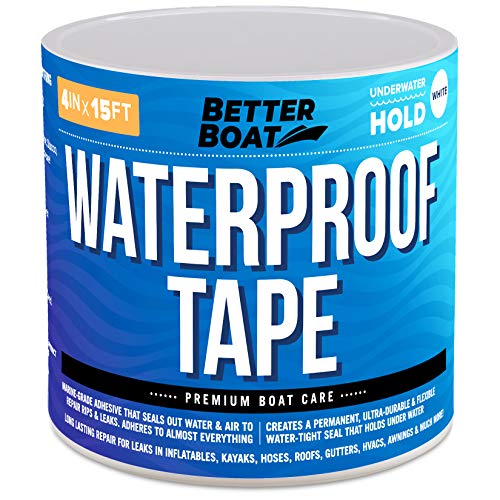
Better Boat’s heavy-duty marine-grade tape is designed to stop leaks quickly. It adheres well to dry surfaces and is described to hold permanently, even when submerged. It bonds to a wide range of materials, including vinyl, fiberglass, metal, and concrete. This tape is a strong option for temporary to semi-permanent patches on boat hulls, pool liners, and gutters. A caveat is that extensive UV exposure or high temperatures can affect tape longevity, so use is best for controlled conditions or temporary fixes.
TOAXUUL Fiberglass Cloth Tape, 1″ x 99 Feet

TOAXUUL offers a 1″ wide fiberglass cloth tape, 99 feet long, designed for reinforced repairs. It emphasizes heat resistance and electrical insulation with moisture-proof properties. Suitable for multi-surface repairs including concrete, wood, metal, and fiberglass, this option is best when bridging holes or gaps in small-to-medium marine projects. It’s a fit for buyers who want a straightforward, non-adhesive cloth to be soaked with epoxy or other resins, though users should plan for secure bonding with compatible resin systems.
SICCOMA Fiberglass Cloth Roll 2″ x 99 Ft

SICCOMA’s 2″ wide, 99-foot fiberglass cloth roll is a non-adhesive, plain weave fabric with durable edges. It’s well-suited for winding pipes, sealing seams, and reinforcing boat surfaces where a larger fabric would be impractical. The non-adhesive nature makes it easy to wet-out with resin for a strong laminate finish. Best for buyers needing precise, targeted reinforcement on boat hull seams or moldings, but it may require compatible bonding materials to secure a seal.
CRMCC Fiberglass Mat Tape 4″ x 10 Yards

CRMCC’s tape uses narrow chopped strand mat, measuring 4″ wide by 30 feet, designed for targeted repairs and seams reinforcement. The mat features a soluble binder and is optimized for rapid saturation with epoxy, vinyl ester, or polyester resins to deliver a strong laminate. This option is best for detailed boat repairs, edge reinforcement, and patching smaller areas. A limitation is the need for proper wet-out and resin compatibility to ensure a bubble-free bond.
Buying Guide: Choosing The Right Fiberglass Tape For Boats
What to consider before buying fiberglass tape for boats:
- Adjacency to resin systems: Ensure the tape or cloth is compatible with epoxy, polyester, or vinyl ester resins you plan to use.
- Non-adhesive vs. adhesive: Non-adhesive cloths require resin or external adhesive; adhesive tapes may simplify quick patches but could be less heat resistant.
- Width and length: Wider tapes cover larger seams; longer rolls reduce the number of joins and cuts needed for big repairs.
- Weave and material strength: Plain weave cloths are common and versatile; biaxial or chopped strand mats offer higher strength for reinforced areas.
- Marine environment durability: Look for flame retardancy, waterproofing, UV resistance, and aging resistance when repairs are exposed to sun and water.
Practical approach: For hull seams and larger patches, combine a non-adhesive cloth with resin-saturating reinforcement. For quick, water-exposure patches, a marine-grade adhesive tape can offer fast sealing, followed by a resin-embedded repair for long-term stability.
FAQ
- What fiberglass tape is best for marine repairs?
Answer: Non-adhesive fiberglass cloth or braided mat works well when saturated with epoxy or polyester resin; it provides a strong laminate over seams and patched areas. - Can fiberglass tape be used on wet surfaces?
Answer: Most tapes require dry surfaces for best adhesion, but some marine-grade tapes claim bonding on wet surfaces; follow product instructions for best results. - Is adhesive-backed tape preferable to cloth for boats?
Answer: Adhesive-backed tapes are quicker for temporary fixes, while cloth with resin is preferred for durable, long-lasting repairs. - What resin should I use with fiberglass cloth tape?
Answer: Epoxy resin, polyester resin, or vinyl ester resin are common; ensure resin compatibility with the cloth or mat used. - How do I prepare a boat surface for fiberglass repair?
Answer: Clean, dry, and roughen the surface; remove loose paint and rust; degrease, then apply resin-impregnated cloth or bonded tape as directed. - Are there safety considerations?
Answer: Wear protective gloves and eyewear; fiberglass dust can irritate skin and lungs, and proper ventilation is advised when curing resins.