Best 12V Trolling Motor Battery Options for Reliable Marine Power
Find the right 12V trolling motor battery to keep your boat quiet, efficient, and ready for a day on the water. This guide highlights five near-term choices, from lightweight AGM models to long-lasting LiFePO4 packs, each matched to a specific boating need. Best for anglers seeking easy handling, best for RVs and campers, or best for cold-weather boating—the selections cover a range of priorities and budgets.
| Product | Best For | Battery Type | Approximate Weight |
|---|---|---|---|
| Newport 12V50Ah Deep Cycle AGM | Lightweight boats and easy transport | AGM Lead Acid | 32 lbs |
| CHITOLI 12V 100Ah LiFePO4 Group 24 | Long life, high cycles for steady power | LiFePO4 | Unknown |
| GREENOE 12V 100Ah LiFePO4 Group 31 | Cold-weather and off-grid setups | LiFePO4 | Unknown |
| Bluetooth LiFePO4 12V 100Ah Group 24 | Smart monitoring and real-time data | LiFePO4 | Unknown |
| FLLYROWER 12V 100Ah LiFePO4 | High cycle life for off-grid and trolling | LiFePO4 | Unknown |
Newport 12V50Ah Deep Cycle AGM Battery
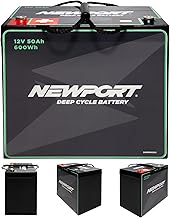
- Weight: 32 lbs, designed to be lightweight for easy transport and installation on marine vessels.
- Sealed AGM lead-acid construction for durability and leak-proof performance.
- 12V compatibility tailored for trolling motors, offering reliable on-water power.
Best for: boaters who prioritize easy handling and a simple, maintenance-free AGM option. This battery is a solid match for anglers or recreational boaters seeking reliable, plug-and-play power without extra weight. Limitation: AGM chemistry can have lower energy density than LiFePO4, potentially requiring more frequent replacement in high-use scenarios.
CHITOLI 12V 100Ah LiFePO4 Group 24

- 100Ah LiFePO4 with 4000+ cycles at 100% DoD and up to 15000 cycles at 60% DoD.
- Built-in Smart BMS for over-charge, over-discharge, over-current, and short-circuit protection.
- Significantly lighter and more compact than lead-acid equivalents.
Best for: users who want longevity, high cycle life, and smart protection for demanding trolling motor use. Choose this if you value long-term cost efficiency and real-time protection. Caution: this battery is noted as suitable for energy storage rather than high-startup power needs in some setups.
GREENOE 12V 100Ah LiFePO4 Group 31

- Group 31 LiFePO4 with UL safety certification and 22.48 lbs weight.
- Built-in multi-protection BMS handling over/under charge, over-current, and discharging, with cold-weather logic.
- Long lifespan up to 15,000 deep cycles, reducing replacement frequency.
Best for: users seeking a light, high-energy-density battery with strong cold-weather protection and a long cycle life for marine or off-grid setups. Limitation: spec notes emphasize energy storage suitability; ensure compatibility with your trolling motor and charging system.
Bluetooth LiFePO4 12V 100Ah Group 24

- Real-time Bluetooth monitoring for voltage, current, capacity, and system health.
- 100Ah capacity with a built-in 100A BMS for robust protection.
- Supports up to 15,000 deep cycles in a marine or RV context.
Best for: buyers who want ongoing visibility into battery performance and remote monitoring. Choose this if you value smart data access and proactive maintenance. Limitation: requires compatible monitoring setup and may involve pairing steps for first use.
FLLYROWER 12V 100Ah LiFePO4

- Grade A LiFePO4 cells with up to 16500 cycles under favorable conditions.
- Comprehensive BMS protection including low/high temp, short circuit, over-discharge/overcharge, and overcurrent.
- Supports 5S series and multiple parallel configurations for higher voltages or capacities.
Best for: marine and off-grid users who demand extreme cycle life and flexible configurations. Choose this if you plan multi-battery setups for higher voltage or larger storage. Caution: ensure proper charging hardware compatible with LiFePO4 BMS requirements for optimal performance.
Buying Guide
Key considerations when choosing a 12V trolling motor battery:
- Battery chemistry: AGM offers maintenance-free convenience; LiFePO4 provides longer life, lighter weight, and deeper cycling.
- Weight and portability: lighter packs reduce boat load and ease installation, especially on small craft.
- Cycle life and durability: prioritize higher cycles if you log frequent use or long seasons.
- Protection features: a robust BMS protects against over-charge, over-discharge, and short circuits, extending life and safety.
- Charging compatibility: verify your charger and trolling motor are compatible with the battery’s voltage, chemistry, and BMS requirements.
- Cold-weather performance: some LiFePO4 packs maintain better performance in cold conditions; look for low-temperature protection.
- Monitoring features: Bluetooth or app-based monitoring can help track health and capacity in real time.
Frequently Asked Questions
- What is the benefit of LiFePO4 over AGM for trolling motors? Answer: LiFePO4 generally offers longer cycle life, lighter weight, deeper discharge tolerance, and better efficiency over time, which can reduce replacements and improve overall performance.
- Can I mix battery types in the same boat? Answer: It is not recommended to mix different chemistries or drastically different ages, as this can lead to uneven charging and performance issues.
- How important is a Battery Management System (BMS)? Answer: A BMS protects against over-charge, over-discharge, over-current, and short circuits, enhancing safety and extending battery life.
- Do I need a special charger for LiFePO4 batteries? Answer: Yes. LiFePO4 cells require chargers compatible with LiFePO4 chemistry and proper voltage settings to ensure safe charging.
- Is a higher Ah rating always better for trolling motors? Answer: Higher Ah provides more energy capacity, translating to longer runtimes, but weight, cost, and charging needs should be considered.
- What should I consider for cold-weather boating? Answer: Look for batteries with low-temperature protection and good performance in cold environments, particularly LiFePO4 options.