Best Boat Wiring Terminal Block Solutions for Clean, Safe DC Power Distribution
When wiring a boat’s DC system, a reliable boat wiring terminal block is essential for clean, safe power distribution. This guide highlights five top options for marine use, focusing on 12V/24V systems, high-current needs, and rugged, corrosion-resistant designs. These blocks are well-suited for solar, engine, and accessory wiring. The following selections help boaters reduce clutter, prevent shorts, and simplify troubleshooting.
| Product | Best For | Key Benefit |
|---|---|---|
| Avelis Bus Bar 12V 150A | Marine systems with solar, inverter, and DC accessory loads | Solid copper bus bar with secure locking covers |
| RVBOATPAT 12V 150A Bus Bar | High-current 12V distribution on boats and trailers | 12 M4 screws, 1/4″ stud, robust design |
| Crivon 12V 150A Marine Bus Bar | Durable, flame-retardant marine wiring | Thick copper bars, nylon base, corrosion resistance |
| Aienxn Marine Bus Bar 12V | Secure installation with buckle bottom | Bottom buckle design for stable cover fit |
| Blue Sea Systems 5026 ST Blade Fuse Block | Heavy-duty fuse and distribution for 24-hour circuits | Ground and cover, 12 circuits option |
Avelis Bus Bar 12V 150A Power Distribution Block
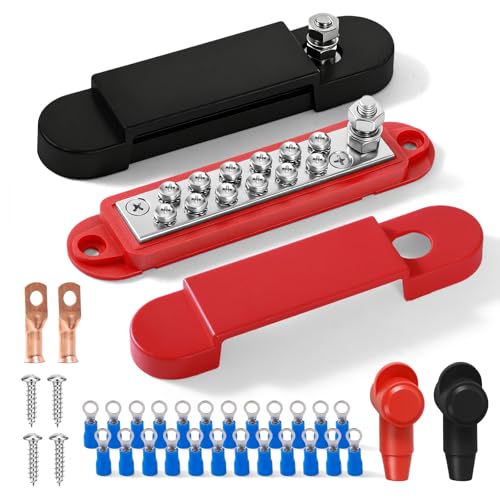
The Avelis 12V 150A distribution block is designed for marine, automotive, and solar wiring. It uses a solid tinned copper busbar with a rigid base to deliver low-resistance connections for battery cables. It supports up to 48 V for inverters and chargers, making it suitable for boats with solar or shore-power systems. This block includes snap-lock covers that resist vibration and help prevent accidental contact, enhancing safety during service or transport. Best for boat owners who need a compact, professional-looking junction that consolidates multiple leads and minimizes clutter at battery posts.
Best for: Boat owners seeking a durable, corrosion-resistant distribution point for solar, inverter, and DC devices. This is also suitable for marine and automotive environments where vibration resistance is critical.
Limitation: The product’s data emphasizes 150 A capacity; ensure your total system draw stays within this rating to avoid overheating.
RVBOATPAT Marine Bus Bar 12V 150A

This bus bar is built for demanding loads, with a maximum operating voltage of 48V DC and current up to 150A AC / 200A DC. It uses 12 M4 stainless steel terminal screws and a 1/4″ terminal bolt and nut for straightforward installation. The bottom buckle design helps secure the cover to the terminal block, reducing movement in rough marine conditions. Best for: Boats and automotive projects needing robust terminals with easy assembly and a secure, water-resistant cover.
Limitation: The description notes higher current ratings but includes both AC and DC values; verify your specific system configuration to match the correct rating.
RVBOATPAT Power Distribution Block 12V 150A

This unit provides a positive and ground 12V bus bar with a pair of covers and copper lugs. Its design emphasizes ease of installation with 12V distribution for boat, automotive, and solar wiring. Best for: Users needing both a positive and ground distribution point in a single block, with easy routing and clear separation of circuits.
Limitation: The listing emphasizes numerous terminals; plan terminals and cable sizes to ensure clean routing and avoid overcrowding.
Crivon 12V 150A Marine Bus Bar
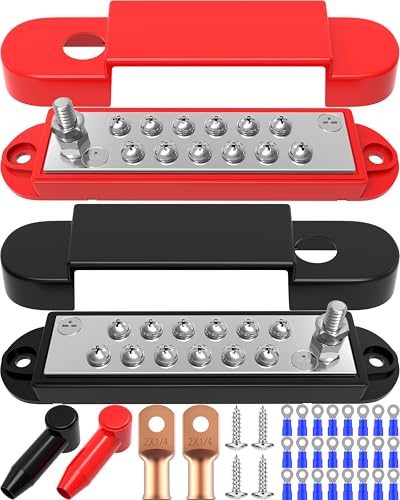
The Crivon bus bar uses thick 3mm tinned copper with a 1/4″ M6 stud configuration. It is built for 150A at 48V DC and features a flame-retardant nylon base, stainless steel screws, and anti-oxidation ring terminals. This makes it suitable for harsh marine or automotive environments where heat, corrosion, or impact resistance matters. Best for: High-current, outdoor or marine installations requiring solid conductivity and durable insulation.
Caution: While robust, ensure proper seal and cover integrity to prevent moisture ingress in extremely damp conditions.
Blue Sea Systems 5026 ST Blade Fuse Block

The Blue Sea Systems 5026 ST consolidates branch circuits and inline fuses with a positive distribution bus and a #10-32 stud. This unit is suited for 24-hour circuits, offering a compact fuse-block solution with a protective cover. Best for: Boats needing a reliable, compact fuse panel that can handle continuous operation while keeping circuits organized.
Limitation: Fuse panels require regular inspection; ensure fuse ratings match each circuit’s load to prevent nuisance blows or underprotection.
Buying Guide: Key Purchase Considerations
- Current capacity: Match the block’s 150A rating to your total system load. Exceeding the rating can cause overheating and failure.
- Voltage range: Most marine blocks support up to 48V DC; verify compatibility with your battery bank and devices.
- Environmental resistance: Look for corrosion-resistant materials and waterproof or waterproof-capable housings if the block is exposed to saltwater or splash zones.
- Installation design: Consider whether you need a single positive/negative layout, a buckle or snap cover, and how easy it is to route wires without crowding terminals.
- Safety features: Snap-lock or secure covers help prevent shorts during servicing. Opt for flame-retardant bases when available.
- Ease of troubleshooting: Blocks with clear labeling and integrated grounds simplify diagnosing faults in solar, engine, or accessory circuits.
- Expansion potential: If you plan to add circuits, select blocks with enough terminals and modular designs to accommodate growth.
Frequently Asked Questions
- What is a boat wiring terminal block used for?
It consolidates multiple battery leads, grounds, and DC circuits into a single, organized junction point, reducing clutter and preventing shorts.
- What rating should I look for in a marine bus bar?
Most boat systems use 12V with up to 150A; however, if you have larger loads or solar arrays, ensure the block supports your total current and voltage.
- Why are covers important on terminal blocks?
Covers protect live connections from moisture and vibration, reducing accidental shorts during movement and maintenance.
- Is copper better than other metals for bus bars?
Copper offers low resistance and good conductivity, which helps minimize voltage drop across the distribution point.
- Do I need a separate fuse block or a fused bus bar?
If you want built-in protection for each circuit, a fuse block or a block with integrated fuses provides immediate circuit protection alongside distribution.
- Can I use these blocks for 24V systems?
Yes, most are rated up to 48V DC, making them suitable for 24V configurations with appropriate current planning.