Best Drill-Powered Boat Propellers for Easier Paddling
Answering the common question, these drill-powered propellers convert a standard drill into a lightweight propulsion tool for small boats. They are best for paddlers seeking faster maneuvering, emergency propulsion, or a compact solution for kayaks, canoes, inflatables, and dinghies. The top picks below focus on compatibility, ease of installation, and durability. Each option targets a different use case, from casual recreational outings to emergency propulsion and improvised trolling. Read on to identify which one fits your vessel and travel style.
| Product | Best For | Key Benefit | Limitations |
|---|---|---|---|
| New Extendable Drill Paddle | Emergency paddling and long reach | Extends up to nearly 4 feet for extra reach | Metal tubing may be heavier |
| HAVUREL Drill-Powered Propeller | Cordless drill users needing strong propulsion | Rust-proof aluminum blades for durability | Drill not included |
| Drill Paddle for Canoe/Kayak | Compact backup propulsion | Simple emergency motor option | Basic design, limited features |
| YueShengYCHUANG Hand Boat Propeller | Easy installation on small boats | Metal/iron construction for rugged use | May require bracket compatibility check |
| QHZYMX Motorized Paddle | Versatile handheld outboard for kayaks | Tool-free installation with adjustable clamps | Clamps must fit transom size |
New Extendable Drill Paddle

The Extended Drill Paddle is designed to reach from 29 inches to nearly 4 feet, offering extra reach for longer strokes or propelling from a distance. It uses metal tubing for durability and strength, and a twist-lock mechanism to set the preferred length. This option is best for paddlers who want more leverage and the ability to navigate larger water areas without a second paddle. Best for longer boats, pontoon setups, and outdoor explorations where reach matters. A potential limitation is added weight from the metal tubing, which may affect balance on very light craft.
Who it’s best for: Paddlers needing a longer reach for maneuvering in open water or those who frequently access stealthy or shallow routes that require extra length.
HAVUREL Drill-Powered Propeller

Industrial-looking aluminum alloy blades provide corrosion resistance and light weight, with a secure clamp mounting and adjustable steering. This setup converts a cordless drill (not included) into a propeller-driven unit that can outpace manual paddling. It’s well-suited for kayaks, inflatable boats, and small rafts. A caution: ensure your drill’s power and chuck compatibility before use, and confirm clamp fit on your vessel to avoid slippage during operation.
Who it’s best for: Users who already own a compatible drill and want a robust, rust-resistant propeller kit for versatile water conditions.
Drill Paddle for Canoe/Kayak

This emergency motor and trolling-style drill paddle provides a straightforward backup propulsion option. Its design emphasizes quick deployment and simple use in paddled vessels. The product is best for casual boaters who want a lightweight, no-fruss solution that can aid when manual paddling becomes tiring or slow. A limitation is that it may not offer the same performance or control as purpose-built trolling motors in demanding conditions.
Who it’s best for: Casual paddlers seeking an affordable, quick-access emergency propulsion option for small watercraft.
YueShengYCHUANG Hand Boat Propeller
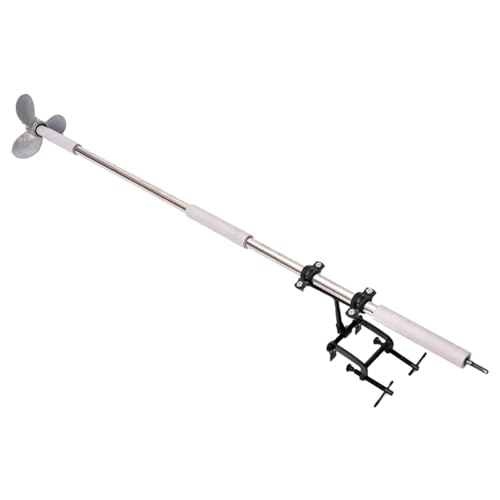
This propeller and bracket system is designed for easy installation on small boats and inflatable craft. Its metal-iron construction promises rugged durability in marine environments. It’s best for boaters who need a reliable, straightforward attachment with reasonable strength. Caution: verify bracket compatibility with your specific vessel dimensions to ensure a secure fit and safe operation.
Who it’s best for: Small-boat owners seeking a sturdy, easy-to-mount option without complicated hardware.
QHZYMX Motorized Paddle

The QHZYMX system emphasizes easy steering and compatibility with transoms up to 2.9 inches or up to 11.8 inches with adjustable brackets. It features a twist handle for precise steering and a lightweight, portable form factor suitable for one-handed operation and compact storage. This option is best for kayaks and small boats where quick setup and maneuverability are priorities. Limitation: ensure your boat’s transom can accommodate the clamp range and adjustable brackets.
Who it’s best for: Paddlers needing a compact, versatile handheld outboard for quick deployment and easy control.
Buying Guide
Key considerations for choosing a drill-powered boat propeller
- Vessel compatibility: Check transom width, clamp ranges, and bracket dimensions to ensure a secure fit on your kayak, canoe, or inflatable boat.
- Power source readiness: Confirm you have a compatible cordless drill (voltage, chuck size) and understand how much power you’ll need for your typical trips.
- Material durability: Aluminum blades offer corrosion resistance and lighter weight, while metal tubing or iron frames increase rigidity and lifetime with potential added weight.
- Installation simplicity: Tool-free or quick-attach designs save time and reduce the risk of improper mounting.
- Control and steering: Look for adjustable clamps, tilt capability, and left/right swing to improve maneuverability in varying water conditions.
- Portability and storage: Consider the size and weight of the unit and whether it fits your vehicle, shed, or boat storage plans.
- Intended use: Distinguish between emergency backup propulsion, trolling assistance, and primary propulsion to choose a design with suitable power and control features.
Practical comparison questions
- Which product is best for emergency use vs. regular propulsion?
- What clamp sizes are required for my boat model?
- Do I need a longer paddle for reach or a compact one for storage?
- Is a metal-tubing paddle heavier than an aluminum blade unit?
- Will I need to purchase a drill separately?
Maintenance and safety tips
- Regularly inspect clamps and brackets for wear or loosening during trips.
- Rinse blades and hardware after saltwater use to reduce corrosion risk.
- Operate at modest speeds in crowded or shallow waters to avoid prop strikes.
- Secure the drill and battery when not in use to prevent accidental activation.
Short FAQ
- Can any cordless drill power these propellers? Most designs are compatible with many drills, but verify chuck size and voltage requirements for each product.
- Are these suitable for large boats? They are typically best for kayaks, canoes, inflatables, and small dinghies, not full-size boats.
- Do they replace a trolling motor? They offer propulsion assistance or emergency power, not a full trolling motor system with long-term efficiency.
- Is installation permanent? Most are clip-on or clamp-based and removable for storage.
- Do I need extra hardware? Some kits include brackets and clamps; others require you to source components separately.
- Are there safety risks with metal blades? Exercise caution to avoid contact when mounting, dismounting, or transporting the craft.