Best Vintage Outboard Gas Tank Options for Safe, Reliable Fuel Transfers
If you’re restoring a classic boat or simply stocking up for regular outboard maintenance, a vintage-style or compatible outboard gas tank can simplify fueling and extend engine life. The top picks below are best for boaters who want portable, sealable fuel storage with clear gauges, durable construction, and easy hose connections. The buyers most likely to benefit are weekend anglers, small-boat owners, and DIY boat restorers seeking practical, durable transfer tanks that fit standard outboard fittings. A quick summary table follows to compare features at a glance.
Product Comparison Summary
- VEVOR Boat Fuel Tank — 3.17 gallons (12 L), high-density polyethylene, 9.8 ft hose, Yamaha compatibility
- Scepter 9 Gallon Portable Marine Gas Can — 34 L, built-in gauge, 2-way vented cap, fits standard fittings
- PeakPursuit Portable Boat Tank — 3 Gal, 9.8 ft hose, level gauge, dual venting
- LAUCO Portable Marine Fuel Tank — 6.34 Gallons, 9.8 ft hose, sealed or vented cap
- LIZHOUMIL Portable Boat Fuel Tank — 3 Gal, hose and gauge, durable construction
VEVOR Boat Fuel Tank, 3.17-Gallon/12-L, Red

Best for smaller craft and deck boats needing a compact, transportable gas tank with quick access. This tank includes a 9.8 ft/3 m hose, designed to pair with Yamaha connectors, making it compatible with common outboard engines. The 3.17 gal/12 L capacity provides enough fuel for short trips without adding excessive weight. Strong HDPE construction resists aging and impact, keeping shape and sealing integrity over time. A caveat: avoid long direct sun exposure to minimize aging and expansion risks.
- Best for: Small to mid-sized boats needing a compact, Yamaha-compatible transfer tank.
- Why selected: Durable, portable, and easy to store under seats or on deck.
- Limitations: Prolonged sun exposure can accelerate aging.
Scepter 9 Gallon Portable Marine Gas Can

Better for boats requiring a larger fuel reserve without frequent refueling. This 9-gallon (34 L) tank balances capacity and maneuverability, with an EPA/CARB-approved 2-way vented cap to prevent vapor buildup during refueling. A built-in gauge and pickup simplify fuel checks and transfer. The can accepts standard marine fittings, and is designed for diesel and ethanol-blended fuels, though the built-in gauge is the highlight for quick level checks. Consider this option if you need longer running time between fills.
- Best for: Boaters needing extended range and convenient fuel level monitoring.
- Why selected: Large capacity with a built-in gauge and vented cap for safe refueling.
- Limitations: Larger size may be less ideal for very small boats or tight storage spaces.
PeakPursuit Portable Boat Tank — 3 Gal

This 3-gallon tank suits anglers and recreational boaters who prioritize compact storage and reliable transfer with a long hose. It features a dual venting system to choose between sealed and vented operation, depending on fuel flow needs. The 9.8 ft hose provides flexibility for reach, and the HDPE body resists aging and corrosion. Best for: quick, on-the-water fueling on small to mid-sized vessels where space is at a premium.
- Best for: Small crew boats needing flexible hose routing and simple venting options.
- Why selected: Compact, easy to carry, and quick to refuel with a built-in gauge.
- Limitations: Smaller capacity requires more frequent refueling on longer trips.
LAUCO Portable Marine Fuel Tank — 6.34 Gal

Choose this when you need a balance of capacity and portability with a robust venting option. The 6.34-gallon capacity is paired with a 9.8 ft hose and a strong HDPE shell, designed to resist aging, impact, and corrosion. The cap supports sealed or vented modes, helping control flow and leakage. Best for: Deck boats and fishing vessels that require more fuel than a 3-gallon tank but still prioritize under-seat storage.
- Best for: Moderate-capacity needs and versatile venting control.
- Why selected: Durable, mid-size tank with flexible venting for safer operation.
- Limitations: Larger than ultra-compact tanks; storage may require more space.
Portable Boat Fuel Gas Tank — 3 Gallon/12L
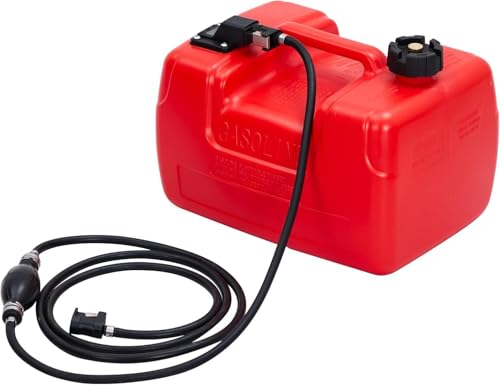
Best for versatile, lightweight fueling with a gauge and robust construction. This 3-gallon tank emphasizes a transparent gauge and a built-in filter to help maintain clean fuel for smoother engine operation. It’s designed for outboard motors and can act as a spare fuel tank aboard. The ergonomic shape and sturdy build make it a solid choice for small boats or back-up fuel needs.
- Best for: Boaters needing a light, reliable spare or primary 3-gallon tank.
- Why selected: Clear gauge and onboard filtration support easy monitoring and fuel quality.
- Limitations: Smaller capacity requires more frequent fueling on longer trips.
EliteEdge 6L Portable Boat Tank

Best for larger small boats needing a compact but sizable fuel source. The 6L (approximately 1.6 gallons) capacity is paired with a 9.8 ft hose and a level gauge, along with a convenient L-shaped handle for carrying. It targets users who want a balance of fuel capacity and mobility, suitable for deck boats and inflatables. A potential limitation is the smaller fuel volume compared to bigger 6–9 gallon options.
- Best for: Those who want a manageable mid-size tank with a long hose for flexible fuel access.
- Why selected: Practical for smaller decks while providing a clear gauge and easy transport.
- Limitations: Lower capacity relative to larger tanks may require more frequent topping off.
Buying Guide
Key purchase considerations help align tank choices with boat size, engine type, and refueling workflow.
- Capacity and usage pattern: Choose 3–6 gallons for light, frequent fueling; opt for 9 gallons for longer trips between fills.
- Hose length and connections: Ensure the hose length fits your docking and storage layout; verify compatibility with your outboard connectors (Yamaha, 1/4 NPT fittings, etc.).
- Venting system: Dual venting or vented caps prevent pressure buildup; sealed caps minimize spills during transport.
- Material and durability: HDPE tanks resist aging and impact; consider UV stabilization for sun-exposed setups.
- Gauge and monitoring: Built-in gauges help track fuel level at a glance, reducing guesswork.
- Portability and storage: Look for molded handles and compact dimensions if space is limited under seats or on decks.
FAQ
- What capacity should I choose for a single-day fishing trip? — A 3–6 gallon tank is typically sufficient for short outings without frequent refueling.
- Are these tanks compatible with all outboard engines? — Most tanks list compatibility with common connectors; verify your engine’s fuel fittings before purchasing.
- Is venting important for marine tanks? — Yes. Venting helps prevent vapor buildup and ensures smooth fuel flow during transfer.
- Can I use diesel in these tanks? — Some models advertise diesel compatibility; check product specs and EPA/CARB guidelines for your region.
- Do these tanks seal well when stored under seats? — Many include seals or vented caps; ensure the cap is securely tightened to minimize leaks.
- What maintenance helps extend tank life? — Rinse with clean water after use, avoid prolonged sun exposure, and replace worn hoses as needed.